Talks & Archives
Watch, live or recorded.
-
-
The Pre-Prophetic Era: Lineage, Miraculous Beginnings, and the Pact of Chivalry
Theis lecture anchors Seerah as the definitive key to contextualizing and living the Quran. Ustadh Mohammed Ali traces the Prophet’s lineage through his great-grandfather Hashim, and his grandfather Abdul Muttalib. Ustadh captures the Prophet’s early life.
Ultimately, Mohammed Ali delivers a vital spiritual reality check, reminding the audience that the ultimate objective of practicing the faith is the complete purification of character and the heart.
-
The Cost of Brotherhood: Overcoming Tribalism and Arrogance in early Islam
This lecture details early Islamic Da'wah's transition from a private message to a bold public call. Makkah's elite grew hostile out of tribal arrogance, launching brutal torture against early converts lacking protection. Despite severe cruelty, believers showed miraculous resilience: Bilal refused to renounce his faith while crushed by a stone, Khabbab endured hot coals, and Sumayya became Islam's first martyr. Islam came to unify humanity, proving rituals mean nothing if the heart holds pride.
This lecture details early Islamic Da'wah's transition from a private message to a bold public call. Makkah's elite grew hostile out of tribal arrogance, launching brutal torture against early converts lacking protection. Despite severe cruelty, believers showed miraculous resilience: Bilal refused to renounce his faith while crushed by a stone, Khabbab endured hot coals, and Sumayya became Islam's first martyr. Islam came to unify humanity, proving rituals mean nothing if the heart holds pride.
-
Finding Your Lane: Unlocking Prophetic Lessons Through the Lives of the Sahabah
This lecture by Ustadh Mohammed Ali anchors the study of Seerah (prophetic biography) as the definitive key to understanding and living the Quran. Tracing the backdrop of Makkah's massive wealth gap and societal injustices, the speaker chronicles the Prophet's retreat into the cave of Hira and his sudden, alarming first encounter with the Angel Jibreel (Gabriel). Following his initial panic, the Prophet found deep emotional reassurance through his wife Khadijah.
This lecture by Ustadh Mohammed Ali anchors the study of Seerah (prophetic biography) as the definitive key to understanding and living the Quran. Tracing the backdrop of Makkah's massive wealth gap and societal injustices, the speaker chronicles the Prophet's retreat into the cave of Hira and his sudden, alarming first encounter with the Angel Jibreel (Gabriel). Following his initial panic, the Prophet found deep emotional reassurance through his wife Khadijah.
-
-
-
Beware of the Dunya
“Have dunya in your hand, not in your heart.”
This life is temporary—a test and a journey toward the Hereafter. We are not called to abandon the dunya, but to put it in its proper place. Use what Allah has given you as a tool to build your Hereafter, rather than allowing wealth, possessions, relationships, status, or desires to become the objects of your heart.
Keep your heart attached to Allah, and your hands free to use the world for His sake.
-
The Importance of Balance in Islam
"If you want knowledge, Allah says in Quran: be conscious of Allah, be regardful of him, and Allah will teach you. Knowledge is here [in the heart]. It's not in the books. What's in the books is information. Information doesn't turn into knowledge until it's applied."
"If you want knowledge, Allah says in Quran: be conscious of Allah, be regardful of him, and Allah will teach you. Knowledge is here [in the heart]. It's not in the books. What's in the books is information. Information doesn't turn into knowledge until it's applied."
-
-
-
The Architecture of Faith: Navigating the Stations of Islam, Iman, and Ihsan
This lecture frames Islam as an educational institution with a core mission statement: to produce true servants of Allah. Ustadh Mohammed Ali breaks down the three progressive stations of the faith—Islam (submission), Iman (faith), and Ihsan (excellence)—each containing its own spiritual sub-degrees.
This lecture frames Islam as an educational institution with a core mission statement: to produce true servants of Allah. Ustadh Mohammed Ali breaks down the three progressive stations of the faith—Islam (submission), Iman (faith), and Ihsan (excellence)—each containing its own spiritual sub-degrees.
-
The stations of the Religion
Ustadh Mohammed Ali outlines Islam’s noble stages and practical steps to advance: begin with obligations—tawḥīd, ṣalāh, zakāh, ṣawm, ḥajj—and progress through steady practice, sound knowledge, and sincere niyyah. He emphasizes measurable actions. A scholarly, Qur’an-and-Sunnah based method to move from duty to excellence and intimacy with God.
Ustadh Mohammed Ali outlines Islam’s noble stages and practical steps to advance: begin with obligations—tawḥīd, ṣalāh, zakāh, ṣawm, ḥajj—and progress through steady practice, sound knowledge, and sincere niyyah. He emphasizes measurable actions. A scholarly, Qur’an-and-Sunnah based method to move from duty to excellence and intimacy with God.
-
-
-
Harf Alif Part 3
Ustadh Mohammed Ali provides a contemporary interpretation of the poetry of Shaykh Ibrahim Niasse from a linguistic standpoint. An explanation of "Sayr Al-Qalb" (a compilation of poetry composed by Shaykh Al-Islam- Shaykh Ibrahim Niasse, praising the Prophet PBUH) using Hadith and Quranic verses to interpret the meaning and general themes throughout his poetry. In this class Ustadth explains the last 10+ verses of the first poem (Harf Alif
Ustadh Mohammed Ali provides a contemporary interpretation of the poetry of Shaykh Ibrahim Niasse from a linguistic standpoint. An explanation of "Sayr Al-Qalb" (a compilation of poetry composed by Shaykh Al-Islam- Shaykh Ibrahim Niasse, praising the Prophet PBUH) using Hadith and Quranic verses to interpret the meaning and general themes throughout his poetry. In this class Ustadth explains the last 10+ verses of the first poem (Harf Alif
-
Harf Alif Part 4
Ustadh Mohammed Ali provides a contemporary interpretation of the poetry of Shaykh Ibrahim Niasse from a linguistic standpoint. An explanation of "Sayr Al-Qalb" (a compilation of poetry composed by Shaykh Al-Islam- Shaykh Ibrahim Niasse, praising the Prophet PBUH) using Hadith and Quranic verses to interpret the meaning and general themes throughout his poetry.
Ustadh Mohammed Ali provides a contemporary interpretation of the poetry of Shaykh Ibrahim Niasse from a linguistic standpoint. An explanation of "Sayr Al-Qalb" (a compilation of poetry composed by Shaykh Al-Islam- Shaykh Ibrahim Niasse, praising the Prophet PBUH) using Hadith and Quranic verses to interpret the meaning and general themes throughout his poetry.
-
Sayr Al-Qalb
The lecture explores a poem praising Prophet Muhammad (SAW) and explains its Arabic meanings and expressions. It highlights Islamic history in Medina, the lives of the Prophet’s companions, and their steadfastness in faith. The lesson emphasizes tawhid, following the Quran and Sunnah, and deepening our love and appreciation for the Prophet (SAW).
The lecture explores a poem praising Prophet Muhammad (SAW) and explains its Arabic meanings and expressions. It highlights Islamic history in Medina, the lives of the Prophet’s companions, and their steadfastness in faith. The lesson emphasizes tawhid, following the Quran and Sunnah, and deepening our love and appreciation for the Prophet (SAW).
-
Sayr Al-Qalb
This lecture explores an Islamic poem praising Prophet Muhammad (SAW), highlighting the lives and sacrifices of companions like Hamza, Abbas, and Ja’far. It examines key historical events, including the Battle of Badr, while explaining Arabic poetry and its expressions of love for the Prophet (SAW). The lesson emphasizes studying the Seerah to strengthen faith, learn from early Muslims, appreciate the freedom to practice Islam, and apply these lessons to modern life.
This lecture explores an Islamic poem praising Prophet Muhammad (SAW), highlighting the lives and sacrifices of companions like Hamza, Abbas, and Ja’far. It examines key historical events, including the Battle of Badr, while explaining Arabic poetry and its expressions of love for the Prophet (SAW). The lesson emphasizes studying the Seerah to strengthen faith, learn from early Muslims, appreciate the freedom to practice Islam, and apply these lessons to modern life.
-
Sayr Al-Qalb
This lecture explores a poem praising Prophet Muhammad (SAW), analyzing its Arabic language, poetic expressions, and themes of love and devotion. It explains the spiritual concepts of Jalal (majesty) and Jamal (beauty), emphasizing balance, self-discipline, sincerity, and consistent obedience to Allah. The lesson highlights the importance of following the Prophet’s example, overcoming the ego, and serving Islam with dedication.
This lecture explores a poem praising Prophet Muhammad (SAW), analyzing its Arabic language, poetic expressions, and themes of love and devotion. It explains the spiritual concepts of Jalal (majesty) and Jamal (beauty), emphasizing balance, self-discipline, sincerity, and consistent obedience to Allah. The lesson highlights the importance of following the Prophet’s example, overcoming the ego, and serving Islam with dedication.
-
Sayr Al-Qalb
This lesson continues the study of a poem praising Prophet Muhammad (SAW), exploring his unmatched character, generosity, dignity, and beauty. It recounts Sheikh Ibrahim’s extensive travels to connect with fellow Muslims, spread Islamic knowledge, and strengthen the faith. The lesson emphasizes sincere love for the Prophet, service to Islam, devotion to Allah, and the importance of building institutions that preserve and share Islamic teachings.
This lesson continues the study of a poem praising Prophet Muhammad (SAW), exploring his unmatched character, generosity, dignity, and beauty. It recounts Sheikh Ibrahim’s extensive travels to connect with fellow Muslims, spread Islamic knowledge, and strengthen the faith. The lesson emphasizes sincere love for the Prophet, service to Islam, devotion to Allah, and the importance of building institutions that preserve and share Islamic teachings.
-
Sayr Al-Qalb
This lesson concludes a poem praising Prophet Muhammad (SAW), highlighting Sheikh Ibrahim’s travels to serve Islam, seek Allah’s pleasure, and inspire future generations. It emphasizes humility, devotion, and holding firmly to the Quran and Sunnah. The discussion also explores spiritual purification through repentance, remembrance of Allah, and sending blessings upon the Prophet, explaining how these practices cleanse the heart, strengthen faith, and encourage sincere obedience to Allah.
This lesson concludes a poem praising Prophet Muhammad (SAW), highlighting Sheikh Ibrahim’s travels to serve Islam, seek Allah’s pleasure, and inspire future generations. It emphasizes humility, devotion, and holding firmly to the Quran and Sunnah. The discussion also explores spiritual purification through repentance, remembrance of Allah, and sending blessings upon the Prophet, explaining how these practices cleanse the heart, strengthen faith, and encourage sincere obedience to Allah.
-
Sayr Al-Qalb
This lesson explores Sheikh Ibrahim’s poem expressing his deep love and yearning for Prophet Muhammad (SAW), whom he describes as the spiritual physician and source of guidance. It discusses the role of a qualified sheikh in overcoming spiritual flaws, the blessings of righteous gatherings and companionship, and the importance of devotion to Allah and His Messenger. Ultimately, spiritual growth must remain grounded in the Quran and Sunnah.
This lesson explores Sheikh Ibrahim’s poem expressing his deep love and yearning for Prophet Muhammad (SAW), whom he describes as the spiritual physician and source of guidance. It discusses the role of a qualified sheikh in overcoming spiritual flaws, the blessings of righteous gatherings and companionship, and the importance of devotion to Allah and His Messenger. Ultimately, spiritual growth must remain grounded in the Quran and Sunnah.
-
Sayr Al-Qalb
This lesson concludes Sheikh Ibrahim’s poem celebrating his profound love for Prophet Muhammad (SAW). It explores how love for the Prophet, remembrance of Allah, and beneficial knowledge nourish the soul, while following the Sunnah keeps believers spiritually connected. The poem expresses the pain of departing Medina, the desire for lasting closeness to the Prophet, and the responsibility to spread and uphold Islam after leaving his presence.
This lesson concludes Sheikh Ibrahim’s poem celebrating his profound love for Prophet Muhammad (SAW). It explores how love for the Prophet, remembrance of Allah, and beneficial knowledge nourish the soul, while following the Sunnah keeps believers spiritually connected. The poem expresses the pain of departing Medina, the desire for lasting closeness to the Prophet, and the responsibility to spread and uphold Islam after leaving his presence.
-
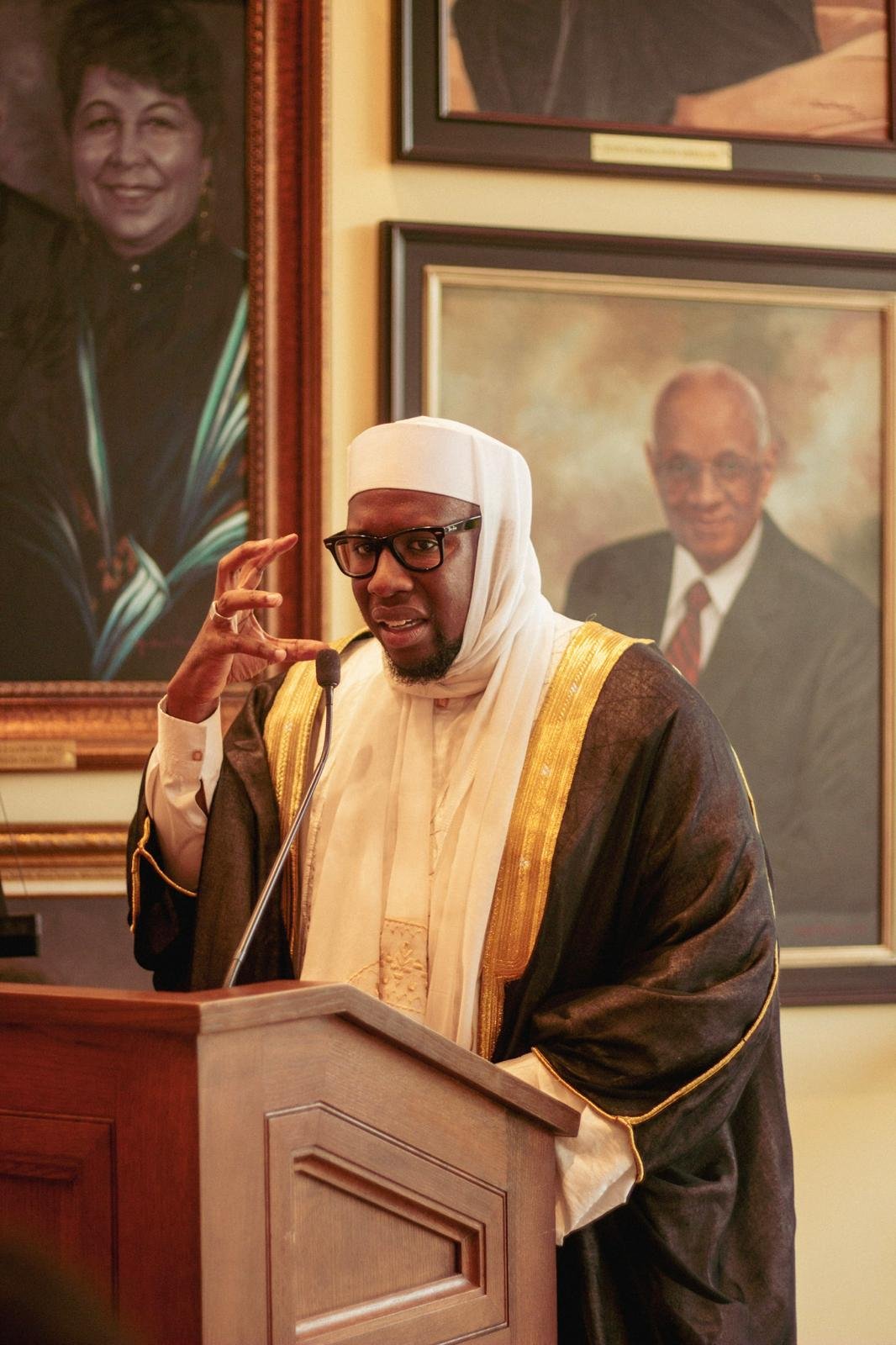
Meet Your Instructor
Mohammed Ali is a graduate of the African American Islamic Institute located in Medina Baye, Kaolack Senegal, founded by the erudite Islamic scholar Shaykh Imam Hassan Cisse.
Originally from Brooklyn, NY he first attended the prestigious Howard University, located in Washington D.C, where he studied the fine arts and Philosophy. After a year of study, he decided to travel abroad in order to study Islam and the Arabic language.
In 2012 he began his journey and spent the last 12 years studying Arabic and the Islamic sciences under the tutelage of Shaykh Muhammad Mahy Cisse and various Shinqiti and Azhari scholars. He was successful in completing the rigorous program and has received a Bachelor of Arts Degree in both Arabic Literature and Islamic Jurisprudence.
He was given authorization to teach Islamic Jurisprudence and Classical Arabic in 2018 by Shaykh Muhammad Mahy Cisse and has been successful in balancing both his studies and teaching on his downtime.
Mohammed takes a very practical approach to teaching the religion emphasizing the importance of both love and knowledge of Allah and his Prophet in order to attain true discipline that the religion requires and obedience to the commandments ordained by Allah.